Energy-Efficient Laptops in 2026: Why Battery Life Is Becoming More Important Than Peak Performance
For many years, laptop manufacturers competed by offering increasingly powerful processors and graphics solutions. Performance benchmarks often determined which device attracted the most attention, while battery life remained a secondary consideration. In 2026, the priorities have shifted. As hybrid working, mobile productivity, AI-assisted applications and cloud computing become part of everyday life, users increasingly value a laptop that can operate efficiently throughout the day without relying on a charger. Improvements in processor architecture, display technology and operating system optimisation have made it possible to achieve excellent responsiveness while significantly reducing power consumption. Instead of focusing solely on maximum processing capability, buyers are now evaluating how efficiently a laptop balances performance, portability and endurance in real-world conditions.
The Shift Towards Energy-Efficient Computing
The latest generation of laptop processors demonstrates how dramatically mobile computing has evolved. Intel Core Ultra Series 2 (Lunar Lake), AMD Ryzen AI 300 processors and Qualcomm Snapdragon X Elite chips all prioritise performance per watt rather than simply increasing clock speeds. These architectures combine efficient processing cores, advanced manufacturing processes and dedicated AI accelerators that reduce the workload placed on the CPU during many everyday tasks. As a result, users experience fast application launches and smooth multitasking while consuming considerably less power than previous generations.
Modern operating systems also play an important role in improving battery efficiency. Windows 11 continues to refine background task management, adaptive power profiles and intelligent scheduling between high-performance and efficiency cores. Applications designed specifically for these new processor architectures can complete workloads more quickly before returning the hardware to low-power states. This approach reduces overall energy consumption without sacrificing responsiveness during demanding activities.
Cloud services have further reduced the need for constantly running local hardware at maximum capacity. File synchronisation, online collaboration, AI-powered writing assistants and cloud-based creative workflows now distribute many computational tasks between the local device and remote servers. Instead of continuously stressing the processor, laptops only increase power consumption when necessary, helping users achieve significantly longer operating times throughout the working day.
Why Performance Alone No Longer Defines a Premium Laptop
In previous years, premium laptops were often judged primarily by benchmark scores. While raw performance remains important for specialised workloads such as professional video production, scientific simulations and advanced software development, these tasks represent only a small proportion of daily laptop usage. Most office work, communication, media consumption and web-based productivity require consistent responsiveness rather than maximum processing output.
Artificial intelligence has also changed expectations. Dedicated NPUs (Neural Processing Units) now handle many AI-assisted features directly on the device, including real-time translation, background noise removal, image enhancement and document summarisation. Because these dedicated accelerators operate far more efficiently than traditional CPUs or GPUs for AI workloads, they reduce energy consumption while maintaining smooth performance.
Manufacturers are therefore designing complete systems rather than chasing individual benchmark records. Display refresh rates adjust dynamically according to on-screen activity, SSD controllers enter low-power modes more frequently and wireless connectivity consumes less energy thanks to newer Wi-Fi 7 and Bluetooth standards. These improvements may appear small individually, but together they contribute to noticeably longer battery life in everyday use.
Advances in Hardware That Extend Battery Life
Display technology has become one of the most significant contributors to improved efficiency. Modern OLED panels with adaptive refresh rates and advanced LTPS technology consume considerably less power during typical productivity tasks than earlier generations. Many premium laptops now automatically switch between different refresh rates depending on user activity, reducing unnecessary energy usage without compromising visual quality.
Battery technology has also improved through higher energy-density lithium-based cells and smarter charging management systems. Manufacturers increasingly optimise charging behaviour to reduce battery wear, allowing many devices to maintain a high percentage of their original capacity after hundreds of charging cycles. Intelligent charging algorithms analyse user habits and delay full charging until shortly before the laptop is normally disconnected from power.
Cooling systems have become more efficient as processor power requirements decline. Vapour chamber cooling, redesigned heat pipes and improved airflow allow laptops to remain quieter while maintaining lower operating temperatures. Because cooling fans activate less frequently, overall power consumption decreases further, particularly during everyday productivity tasks where silent operation has become an important advantage.
Choosing Hardware Based on Everyday Usage
Consumers increasingly evaluate laptops according to how they perform during realistic daily workloads rather than laboratory stress tests. Activities such as web browsing with multiple tabs, video conferencing, document editing, cloud collaboration and media streaming represent the majority of laptop usage for many people. Efficient hardware delivers consistent responsiveness during these tasks while preserving battery capacity throughout the day.
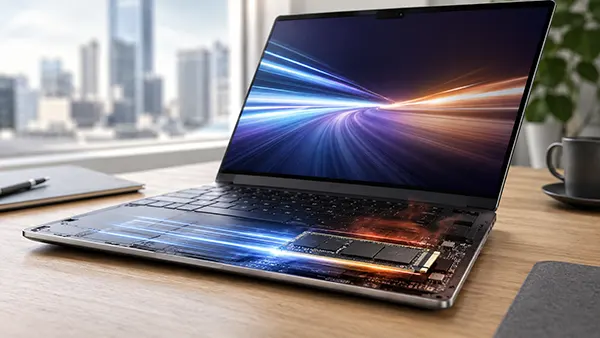
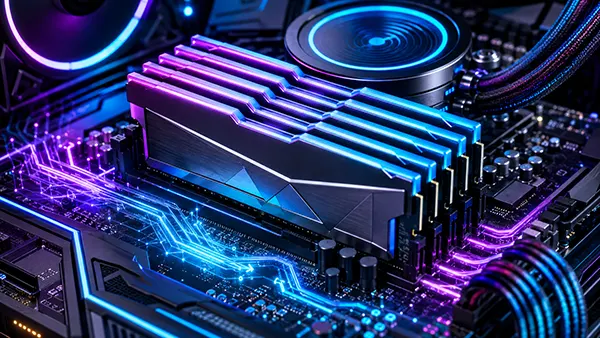
Memory capacity also contributes to efficiency. Modern LPDDR5X memory operates at lower voltages while providing higher bandwidth, allowing processors to access data more quickly without significantly increasing power consumption. Combined with fast PCIe Gen4 and Gen5 solid-state drives that spend more time in low-power states, overall system efficiency continues to improve across every hardware component.
Integrated graphics have reached a level where many creative applications, photo editing tasks and light video production can be completed without requiring dedicated graphics hardware. By avoiding the higher power demands associated with discrete GPUs, many users benefit from substantially longer battery life while still enjoying capable graphical performance for everyday creative work.
Why Battery Life Has Become a Key Buying Decision
Flexible working patterns have fundamentally changed how laptops are used. Professionals frequently alternate between offices, homes, shared workspaces, trains and airports throughout the week. Students attend lectures, collaborate in libraries and complete assignments from various locations. In these situations, reliable battery life provides greater practical value than hardware that delivers exceptional benchmark numbers but requires frequent charging.
Sustainability has become another important consideration for both consumers and manufacturers. Lower energy consumption reduces electricity usage throughout a laptop’s lifetime, while efficient processors generate less heat and place less stress on internal components. Longer battery lifespan can also delay replacement costs and reduce electronic waste, supporting broader environmental objectives adopted across the technology industry.
As artificial intelligence features continue expanding throughout Windows, productivity software and creative applications, efficient hardware design will become even more valuable. Dedicated AI processors, smarter operating system scheduling and increasingly efficient semiconductor manufacturing are expected to deliver further improvements without dramatically increasing power requirements.
The Future of Mobile Computing Beyond Raw Performance
The direction of laptop development clearly indicates that future innovation will focus on delivering balanced computing experiences rather than pursuing maximum processing power alone. Users increasingly expect devices that remain cool, quiet and responsive while operating for an entire working day under realistic conditions.
Manufacturers are investing heavily in processor efficiency, intelligent power management and AI acceleration because these technologies improve everyday usability across virtually every category of user. Professionals, students and casual users alike benefit from hardware that intelligently allocates resources instead of consuming maximum power continuously.
In 2026, battery life has become a defining measure of laptop quality rather than a secondary specification. Devices that successfully combine efficient processors, intelligent software optimisation, advanced displays and durable battery technology provide the greatest long-term value for most users. Instead of asking which laptop delivers the highest benchmark score, buyers are increasingly asking which device can support an entire day of productive work with the least compromise.