CAMM2 and LPCAMM2 in Laptops and Compact PCs: Is SO-DIMM Losing Ground?
The memory landscape in modern laptops and compact PCs is shifting faster than many users realise. For years, SO-DIMM modules defined upgradeability and flexibility, but recent developments around CAMM2 and LPCAMM2 are beginning to challenge that standard. These newer memory formats are not just technical experiments — they are already appearing in high-end devices and influencing how manufacturers design ultra-thin systems in 2026.
What CAMM2 and LPCAMM2 Actually Change in Hardware Design
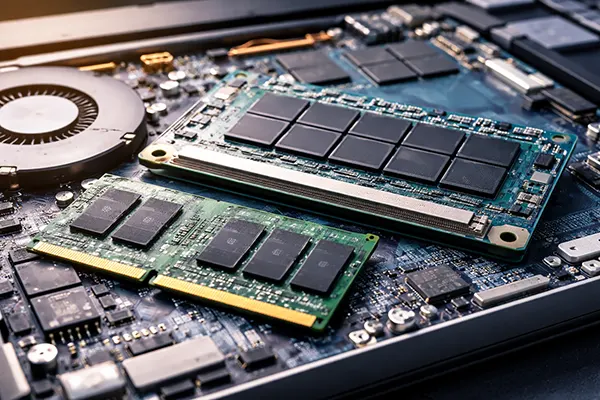
CAMM2 (Compression Attached Memory Module) represents a significant redesign of how RAM connects to a motherboard. Instead of vertical slots typical of SO-DIMM, CAMM2 lies flat against the board, reducing thickness and improving signal integrity. This design is particularly relevant for thin laptops where every millimetre matters.
LPCAMM2, a low-power variation designed around LPDDR memory standards, pushes this idea further. It enables energy-efficient memory typically reserved for soldered configurations to remain modular. In practical terms, this allows manufacturers to combine the efficiency of LPDDR5X with a replaceable form factor — something previously impossible in most consumer devices.
The impact on system architecture is substantial. Manufacturers can simplify motherboard layouts, reduce trace lengths, and improve thermal distribution. These changes are not just theoretical improvements; they translate into thinner devices with more stable high-speed memory performance, especially in systems using next-generation CPUs from Intel and AMD.
Why Manufacturers Are Actively Transitioning to CAMM2
One of the main drivers behind CAMM2 adoption is space efficiency. Traditional SO-DIMM slots require vertical clearance, which limits how thin a laptop can be. CAMM2 eliminates this limitation, enabling slimmer designs without sacrificing memory capacity.
Another factor is signal quality. As memory speeds increase beyond DDR5 standards, maintaining stable connections becomes more challenging. CAMM2 reduces electrical interference by shortening pathways between memory and processor, which helps maintain reliability at higher frequencies.
There is also a production advantage. With fewer components and simplified layouts, manufacturers can streamline assembly processes. While initial implementation costs are higher, long-term scalability makes CAMM2 an attractive option for premium and eventually mid-range devices.
Does SO-DIMM Still Have a Place in 2026?
Despite the momentum behind CAMM2, SO-DIMM is not disappearing overnight. It remains widely used in budget laptops, business machines, and desktop mini-PCs where cost efficiency and standardisation are more important than ultra-thin design.
Another important factor is ecosystem maturity. SO-DIMM has decades of compatibility across platforms, making it easier for users to upgrade memory without worrying about proprietary solutions. This familiarity still plays a major role, particularly in enterprise environments where predictability matters.
There is also the issue of availability. CAMM2 modules are still limited in distribution compared to SO-DIMM. While adoption is growing, the supply chain has not fully adjusted, which keeps SO-DIMM relevant for a large portion of the market in 2026.
Where SO-DIMM Is Starting to Lose Its Advantage
The biggest weakness of SO-DIMM is physical limitation. As devices become thinner and more compact, traditional slots simply do not fit within modern design constraints. This is especially noticeable in premium ultrabooks and high-performance compact systems.
Performance is another concern. With increasing demand for faster memory, SO-DIMM struggles to maintain signal integrity at higher speeds compared to newer formats like CAMM2. This creates a bottleneck in systems designed for advanced workloads such as AI processing or high-end gaming.
Energy efficiency also favours newer standards. LPCAMM2, based on LPDDR memory, consumes less power than typical SO-DIMM configurations. In battery-powered devices, this difference directly affects runtime, making newer formats more appealing for mobile computing.
Future Outlook: Will CAMM2 Replace SO-DIMM Completely?
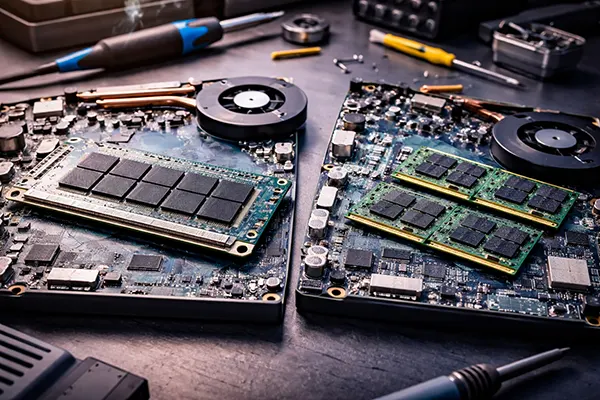
The transition to CAMM2 is not expected to be immediate or universal. Instead, the market is likely to split into segments. High-end laptops and compact workstations will continue adopting CAMM2 and LPCAMM2, while entry-level and upgrade-focused systems may retain SO-DIMM for several years.
Industry support is already forming around CAMM2. JEDEC standardisation has played a key role in legitimising the format, encouraging wider adoption across manufacturers. As more vendors integrate CAMM2 into their designs, compatibility and pricing will gradually improve.
Consumer expectations will also influence the transition. Users increasingly demand thinner devices without sacrificing performance. CAMM2 addresses both needs, which gives it a strong position moving forward, especially as software becomes more memory-intensive.
What This Means for Buyers and Upgraders
For buyers in 2026, the choice of memory format is becoming more important than before. Devices with CAMM2 offer better long-term performance potential, but may have limited upgrade options depending on implementation.
For enthusiasts and professionals, LPCAMM2 introduces a new level of flexibility. It combines modularity with low-power efficiency, making it suitable for advanced portable systems that previously relied on soldered memory.
Those who prioritise easy upgrades and lower costs may still prefer systems with SO-DIMM. However, it is clear that the direction of the industry is shifting. Over time, CAMM2 and LPCAMM2 are likely to become the default in performance-focused devices, gradually reducing the role of traditional memory modules.